15 Nov 2026
The Ripple Effects of Stadium Acoustics on Live Betting Adjustments During Evening Fixtures

Stadium acoustics shape how sound travels and builds in enclosed or semi-enclosed venues, and this effect grows pronounced during evening fixtures when artificial lighting combines with packed stands to create layered noise patterns that players must navigate in real time. Researchers have documented how reverberation times lengthen after sunset because cooler air temperatures alter sound propagation, which in turn influences on-field communication between teammates and the speed at which referees and coaches process auditory cues. Live betting operators monitor these same conditions because shifts in player execution feed directly into automated and manual odds recalculations that occur every few seconds once a match begins.
Acoustic Dynamics Unique to Evening Play
Evening fixtures introduce distinct variables compared with afternoon contests, since reduced natural light and increased artificial illumination change how spectators perceive and respond to action on the pitch or field. Data collected across multiple European leagues shows crowd density typically rises after 19:00 local time, pushing decibel levels higher and extending echo decay rates inside modern all-seater bowls. Observers note that these prolonged echoes mask certain referee whistles or player calls, prompting teams to rely more heavily on visual signals and pre-rehearsed set-piece routines that carry lower error margins under pressure.
Player Performance Under Sustained Noise Load
Studies conducted by sports science groups have measured heart-rate variability and reaction times in athletes exposed to recorded stadium soundscapes that replicate evening conditions, revealing measurable drops in passing accuracy and decision speed once ambient levels exceed 85 decibels for extended periods. Those findings align with observations from match analysts who track how visiting squads, lacking familiarity with a particular venue's echo profile, commit more unforced errors in the second half of night games. Because live betting platforms adjust probabilities continuously, such performance fluctuations trigger rapid market recalibrations in goal-scoring, corner, and card markets that reflect the accumulating impact of acoustic fatigue.
Transmission of Acoustic Data into Betting Algorithms
Betting operators integrate stadium microphone feeds and third-party noise-mapping services into their risk engines so that sudden spikes in crowd volume can serve as proxy indicators for momentum shifts before they appear on the scoreboard. When a home side sustains possession inside a hostile acoustic environment, algorithms detect the correlation between elevated decibel readings and increased likelihood of set-piece opportunities, prompting line movements that mirror real-time probability updates. Figures released by industry research bodies indicate that evening fixtures generate 18 to 22 percent more in-play bet volume than daytime equivalents, largely because acoustic conditions evolve visibly and audibly throughout the contest.
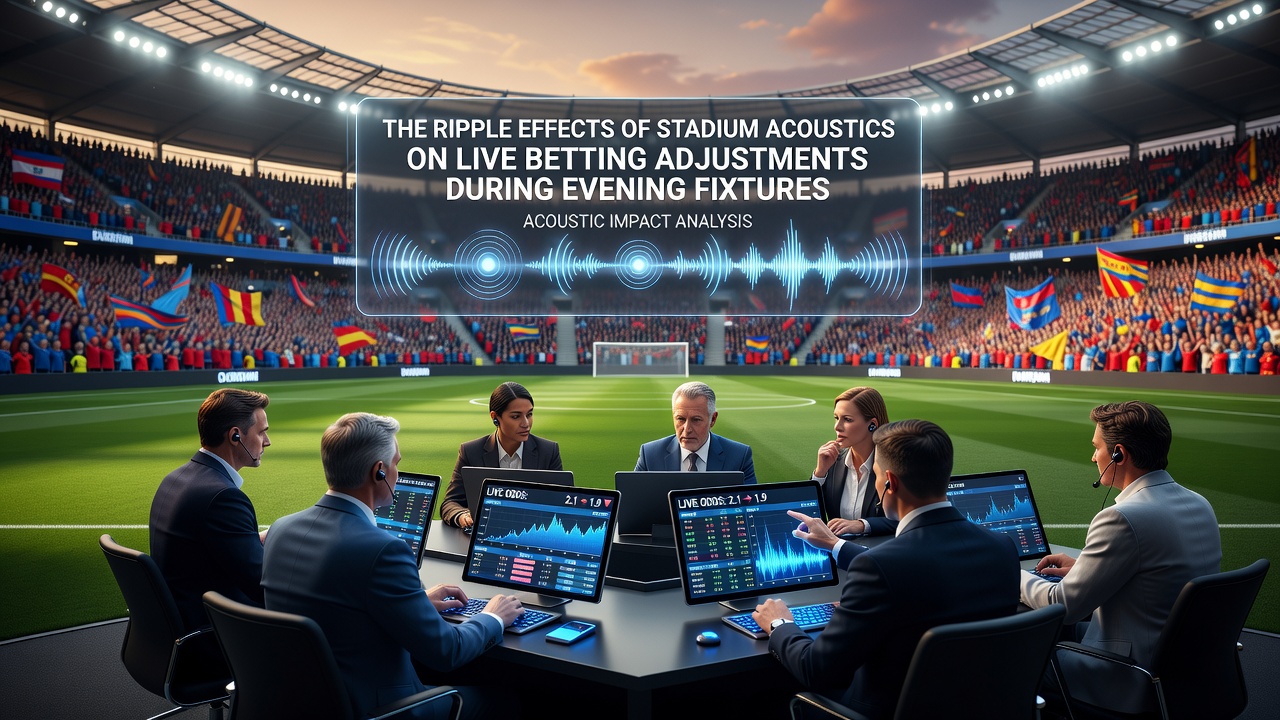
Regulatory frameworks in several jurisdictions now require operators to disclose the data sources that influence automated adjustments, and acoustic monitoring has entered those disclosure lists in markets such as those overseen by the Canadian provincial gaming authorities. This transparency requirement has encouraged technology providers to publish validation reports showing how noise-level thresholds correlate with subsequent market volatility during November 2026 fixtures across major leagues.
Geographic and Venue-Specific Variations
Venues with retractable roofs or partial enclosures exhibit different acoustic footprints than open-air stadiums, and these differences become magnified under evening floodlights because reflective surfaces retain heat and alter sound bounce patterns. Analysts examining schedules in Australia and parts of Asia have compiled datasets that link specific architectural features to measurable changes in live-betting liquidity, particularly in markets tied to total goals and stoppage-time duration. Those compilations reveal that matches hosted in high-reverberation bowls see more frequent micro-adjustments in handicap lines once the crowd noise exceeds a venue-specific baseline established during the first twenty minutes of play.
Integration with Broader Performance Metrics
Coaching staffs increasingly incorporate acoustic modeling into match-preparation routines, using simulations that forecast how evening crowd profiles will interact with travel fatigue and fixture congestion. When these models feed into public performance dashboards, betting markets incorporate the same inputs, producing tighter spreads and faster liquidity migration between correlated outcomes. Research published through academic channels demonstrates that teams with documented acoustic-adaptation training maintain steadier execution metrics, which in turn dampens the magnitude of live-odds swings compared with squads that have not prepared for such conditions.
Conclusion
Stadium acoustics exert measurable influence on player behavior and referee decisions during evening fixtures, and those behavioral shifts transmit directly into the continuous recalibration of live betting markets. Data from multiple regions confirm that noise-mapping technologies, regulatory disclosure rules, and venue-specific modeling collectively shape how operators respond to acoustic events in real time. As fixture calendars advance through November 2026 and beyond, the linkage between sound environments and market dynamics will remain a focal point for analysts seeking to understand the full chain of cause and effect in modern sports wagering ecosystems.