4 Oct 2026
Examining Intersections Between Artificial Intelligence Tools and Traditional Forecasting Methods in Athletic Outcome Prediction Circles
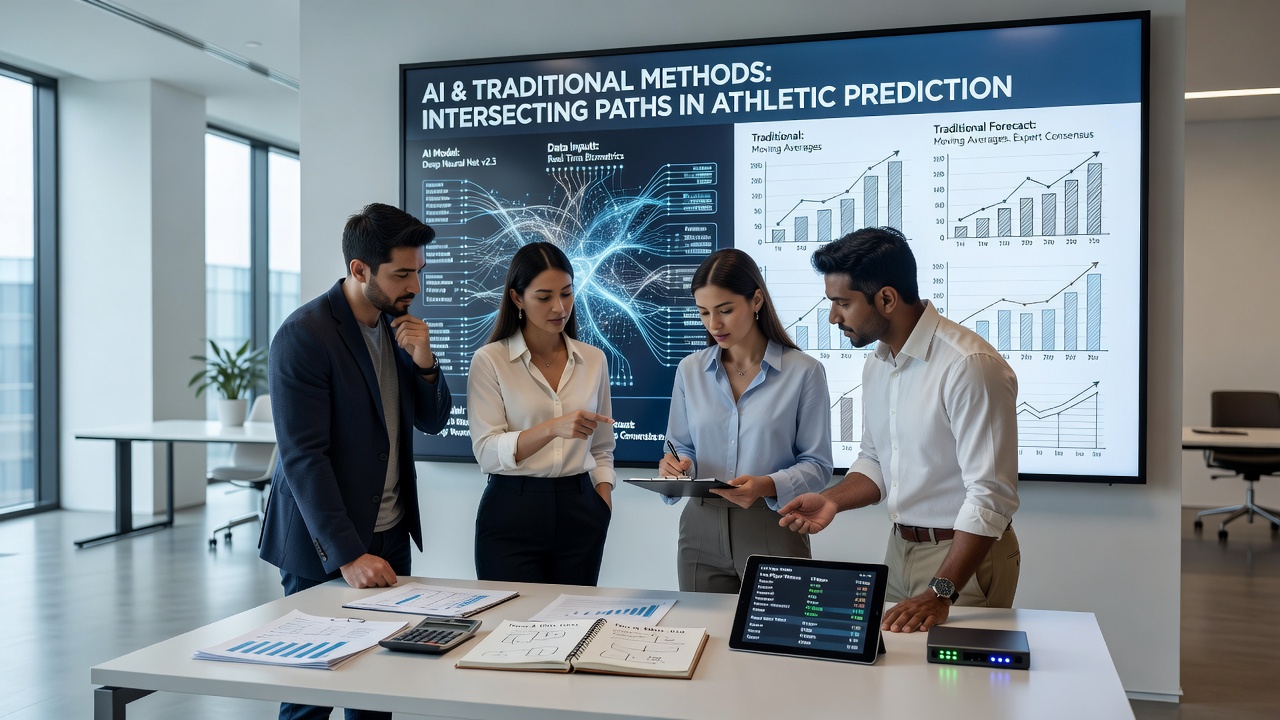
Analysts in athletic outcome prediction have long relied on established statistical frameworks that draw from historical performance records, player metrics, and situational variables, yet recent integrations with machine learning systems have begun to reshape how these forecasts are generated and refined. Researchers at various institutions continue to explore how algorithms process vast datasets alongside conventional models that emphasize regression analysis and expert judgment calls. Data from multiple leagues shows that hybrid systems often incorporate both elements to adjust for variables such as weather conditions, team dynamics, and injury reports that traditional methods have tracked for decades.
Foundations of Traditional Forecasting Approaches
Traditional methods in athletic prediction typically start with the compilation of box score statistics, head-to-head records, and trend lines derived from past seasons, and these practices remain central in many professional scouting operations. Experts compile these elements into weighted formulas that account for home-field advantages and scheduling factors, while organizations like the Australian Institute of Sport have documented how such approaches support talent identification programs across multiple disciplines. Observers note that these techniques allow for transparent calculations where each input can be traced back to verifiable game logs, creating a foundation that many forecasters still reference when evaluating upcoming matches.
Seasoned analysts often apply multivariate regression to isolate key performance indicators, and this process has evolved through decades of refinement in sports like basketball and soccer where positional data accumulates rapidly. Those who have studied these systems point out that manual adjustments for anomalies, such as unexpected roster changes, continue to play a role that automated processes alone have not fully supplanted. Figures from league archives reveal consistent use of these methods in pre-season outlooks issued by teams and media outlets alike.
Development of Artificial Intelligence Applications
Machine learning models now ingest real-time sensor data from wearables and tracking systems, enabling predictions that adapt during live events rather than remaining static ahead of competition. Studies conducted at North American universities have demonstrated how neural networks identify subtle patterns in player movement that escape notice in standard statistical reviews, and these tools process information at scales far beyond manual review capabilities. In October 2026, several professional leagues reported expanded partnerships with technology firms to integrate such models into their analytics departments.
Researchers have observed that reinforcement learning techniques allow systems to simulate thousands of game scenarios based on historical inputs, producing probability distributions that update with each new data point. This capability stands in contrast to fixed algorithms used in earlier decades, though many implementations still require calibration against established benchmarks to maintain reliability across different sports. Evidence from European football competitions indicates growing adoption rates among clubs seeking edges in transfer decisions and tactical planning.
Hybrid Models and Their Integration Points
Intersections between the two approaches often occur when AI systems serve as initial filters that highlight variables for deeper traditional analysis, and this combination appears in several operational forecasting platforms used by sports organizations. Analysts feed outputs from ensemble methods back into regression models to verify consistency with known historical trends, creating iterative loops that refine accuracy over multiple cycles. One study revealed that such layered processes reduced variance in long-term projections compared to either method applied in isolation.

Practitioners in the field report that feature selection remains a shared task where domain knowledge from traditional forecasters guides which data streams enter machine learning pipelines, preventing irrelevant noise from diluting model performance. Canadian research initiatives have tracked how these collaborations function in ice hockey analytics, where both puck-tracking technology and legacy shot metrics contribute to final evaluations. The process allows forecasters to maintain interpretability while leveraging computational scale for pattern detection across large sample sizes.
Applications Across Different Athletic Contexts
In baseball, teams have combined pitch-tracking data processed through AI with established sabermetric formulas to project pitcher workload and recovery needs, and similar patterns emerge in American football where play-calling models incorporate both video analysis outputs and down-and-distance statistics. Track and field events provide another arena where timing data from sensors augments historical performance curves maintained by governing bodies. Observers note that these intersections vary by sport due to differences in data availability and the complexity of scoring systems.
International competitions scheduled for late 2026 have prompted several national Olympic committees to test integrated platforms that blend coach assessments with algorithmic simulations, according to reports from the International Olympic Committee. Such efforts aim to optimize training schedules and event strategies while preserving the contextual insights that experienced personnel contribute. Data indicates measurable improvements in projection stability when both sources inform the final outputs.
Limitations Encountered in Combined Systems
Challenges arise when data quality varies across sources or when sudden rule changes disrupt the historical baselines that traditional models depend upon, requiring frequent retraining of AI components. Researchers have documented cases where over-reliance on algorithmic outputs led to overlooked contextual factors that human analysts traditionally flagged, prompting many groups to retain oversight mechanisms. Transparency requirements in certain regulatory environments further influence how these intersections are structured and reported.
Conclusion
The ongoing examination of intersections between artificial intelligence tools and traditional forecasting methods continues to produce refined prediction frameworks that draw from both computational power and established analytical practices. As datasets expand and processing capabilities advance, athletic outcome prediction circles maintain focus on verifiable performance indicators while incorporating new techniques that enhance pattern recognition across diverse sports. Continued documentation of these developments supports broader understanding of how such integrations function in practice.